Pattern 02
Context before application
Carry the passage and question together when moving into explanation or reflection.
Concrete takeaway
Keep the selected reference visible and offer adjacent text before personal application.
Choose an approach
These are editorial decision conditions to validate. Some alternatives are successive states or can be combined; they are not always exclusive choices.
| Alternative | Use when | Tradeoff or requirement |
|---|---|---|
| A · Selected passage | The question concerns a selected verse | A narrow selection may conceal the wider argument |
| B · Wider context | Context materially affects interpretation | Extra text increases reading effort |
| C · Optional reflection | The person wants a personal reflection | Application is optional and must not outrun context |
The problem
A verse selected from a larger argument can receive an application that ignores its speaker, audience, genre or surrounding passage.
The pattern
Keep the selected reference visible and offer adjacent text before personal application. Let people choose textual explanation, comparison or reflection. Returning to reading restores the same translation and anchor.
Compare the alternatives
Carry the passage and question together when moving into explanation or reflection.
A · Selected passage
The question stays bound to its source.
B · Wider context
Expand the reading range without replacing the question.
C · Optional reflection
Application is a separate, voluntary step.
Original wireframe proposals · No live controls · Grey rows represent schematic text, not loading states · Labelled placeholders are not Scripture quotations
Download this wireframe as SVGFailure modes
Treating every verse as a direct instruction to the current user; losing the passage when opening chat; requiring personal disclosure to explain a text.
Bible and faith considerations
Different traditions may approach application differently. Name the interpretive approach instead of assuming one universal reading.
What to validate
Can readers move from a selection to its wider passage and back? Can they tell historical explanation from a suggested present-day reflection?
Research-informed design proposal. These visual alternatives have not been tested with users in this atlas. Source findings, documented behaviour and this proposed adaptation are different kinds of evidence.
Sources and adaptation
This card is an original design synthesis. The following sources inform its content distinctions, interaction approach or review requirements; they do not validate the whole pattern.
- Scripture structure documentationRelevant structure and marker references reviewed · A format is not a complete model of app behaviour, annotations or formation.
- How can AI UI capture intentArticle reviewed · Avoid turning contextual assistance into hidden inference about belief, health or emotional state.
- Where should AI sit in your UIArticle reviewed · Its role interpretations should be tested with the intended audience; they do not establish universal layout rules.
Common scenarios and flows
- Move from a focused passage to sustained reading — Support a bounded encounter without trapping the reader inside an excerpt.
Examples in use
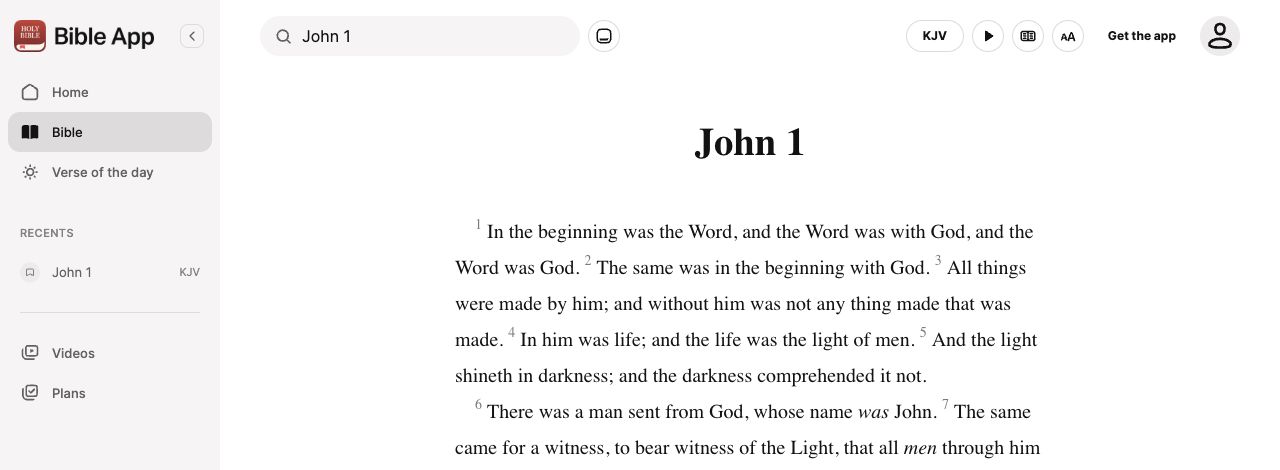
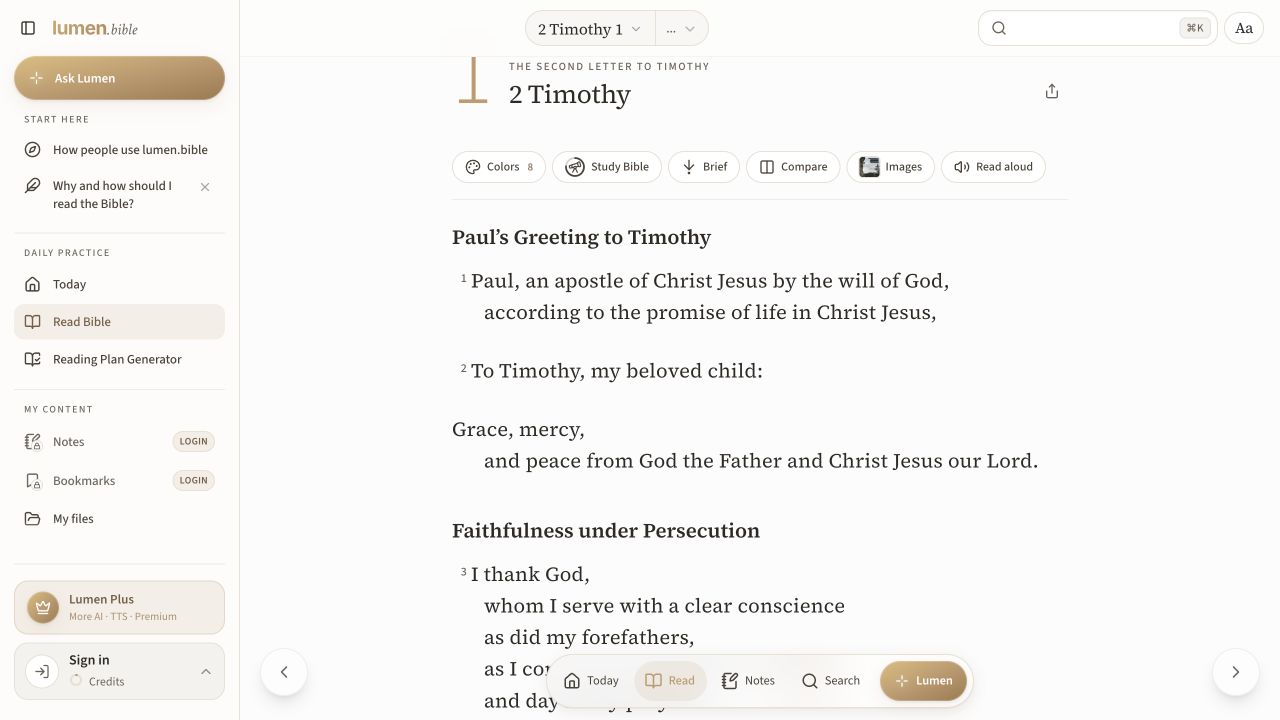
Attributed app evidence with dates and review limits. A screenshot illustrates an implementation; it does not establish that the proposal works for every audience.
Design principles in this decision
Editorial application of Missional by Design. These values frame review questions; they do not validate a pattern’s effectiveness.
- Hospitality — Who can use this approach in their actual context, and what complete alternative exists for someone who cannot?
Compare alternatives using the task and evidence above. Record competing needs instead of treating a principle as an automatic verdict.