Pattern 51
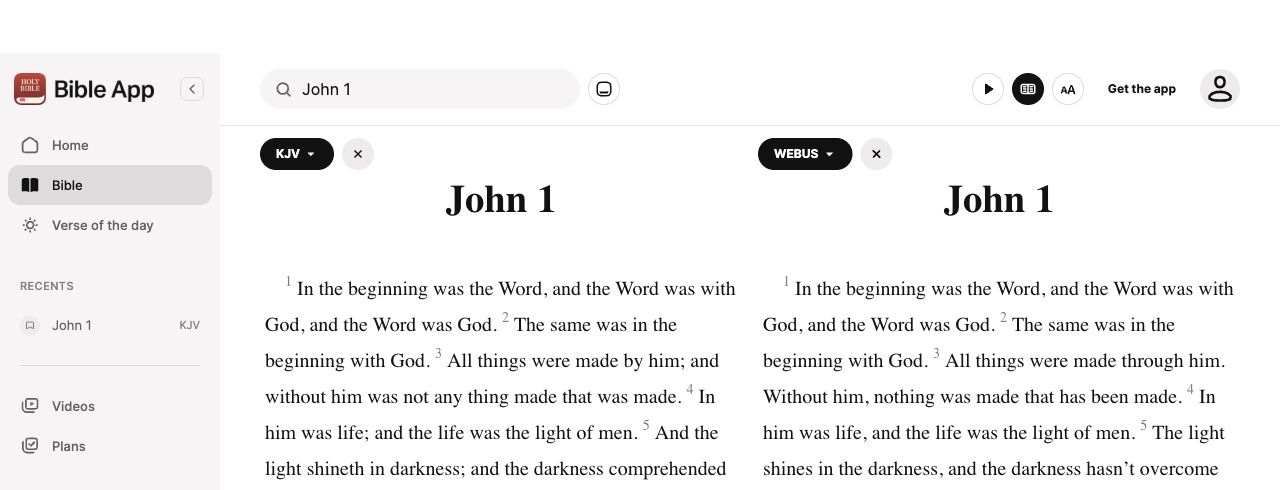
Change translation without losing the passage
Preserve a semantic reading anchor rather than a pixel offset.
Concrete takeaway
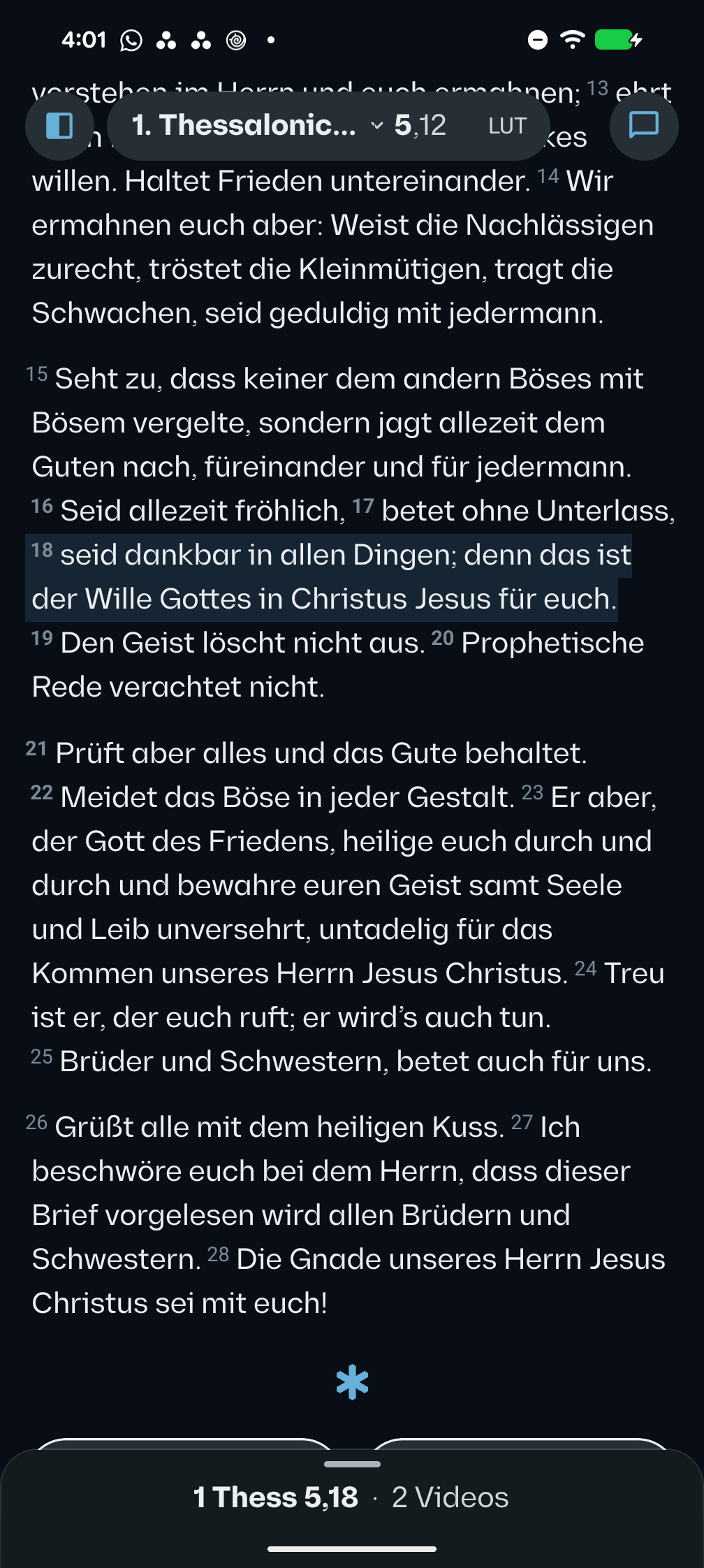
Before switching, identify the relevant anchor: the active selection or opened target, otherwise the visible reading verse; use the spoken verse only while Follow narration is enabled.
Choose an approach
These are editorial decision conditions to validate. Some alternatives are successive states or can be combined; they are not always exclusive choices.
| Alternative | Use when | Tradeoff or requirement |
|---|---|---|
| A · Selected verse | A selection or opened target is active | Reapply its semantic anchor after layout settles |
| B · Reading freely | The person is exploring while audio continues | Preserve the reading anchor rather than the audio anchor |
| C · Mapping or audio differs | Mapping or the recording edition differs | Explain the mismatch instead of claiming exact alignment |
The problem
Different wording, poetry, headings and verse grouping change layout height. Retaining the old scroll offset can move the selected verse out of view.
The pattern
Before switching, identify the relevant anchor: the active selection or opened target, otherwise the visible reading verse; use the spoken verse only while Follow narration is enabled. Retain its approximate viewport position or bring it safely into view after the new edition has laid out. Reapply placement after late font or media loading only until the user scrolls; manual exploration takes precedence. Resolve versification with a trusted mapping and explain missing, split or merged verses. Keep reference notes separate from edition-specific word selections. Audio stays bound to its recorded edition: offer matching audio or clearly separate listening from the new text, and disable incompatible word cues.
Compare the alternatives
Preserve a semantic reading anchor rather than a pixel offset.
A · Selected verse
A semantic anchor survives a different paragraph height.
B · Reading freely
Preserve the visible reading place rather than the audio position.
C · Mapping or audio differs
Unavailable equivalence has an explicit recovery.
Original wireframe proposals · No live controls · Grey rows represent schematic text, not loading states · Labelled placeholders are not Scripture quotations
Download this wireframe as SVGFailure modes
Restoring raw pixels; jumping to the chapter start; following audio after the reader scrolled away; copying word highlights onto unrelated wording; endlessly recentering during loading.
What to validate
Switch editions while selecting a verse, freely reading, following audio, opening a note and using large text. Test poetry, missing verses, split or merged mappings, load failure and late reflow.
Research-informed design proposal. These visual alternatives have not been tested with users in this atlas. Source findings, documented behaviour and this proposed adaptation are different kinds of evidence.
Sources and adaptation
This card is an original design synthesis. The following sources inform its content distinctions, interaction approach or review requirements; they do not validate the whole pattern.
- Scripture structure documentationRelevant structure and marker references reviewed · A format is not a complete model of app behaviour, annotations or formation.
- EPUB Media OverlaysRelevant specification section reviewed · Not proof of a particular Bible app implementation.
- Understanding ReflowOfficial guidance reviewed on 5 October 2026 · Semantic scroll restoration is an original design proposal, not a requirement stated by this criterion.
Common scenarios and flows
- Open a reference and retain context — Reach the intended verse or range without losing the search or conversation.
- Move from a focused passage to sustained reading — Support a bounded encounter without trapping the reader inside an excerpt.
Examples in use
Attributed app evidence with dates and review limits. A screenshot illustrates an implementation; it does not establish that the proposal works for every audience.
Design principles in this decision
Editorial application of Missional by Design. These values frame review questions; they do not validate a pattern’s effectiveness.
- Honesty — Could this interface lead a person to infer more authority, certainty, privacy or human support than the service provides?
- Fruit — What outcome matters for this task, what can be observed responsibly, and what remains beyond the evidence?
Compare alternatives using the task and evidence above. Record competing needs instead of treating a principle as an automatic verdict.