Pattern 08
Original media before synthesis
Let readers inspect the source behind an explanation.
Concrete takeaway
Use media cards with creator, original source, duration and relevant time range.
Choose an approach
These are editorial decision conditions to validate. Some alternatives are successive states or can be combined; they are not always exclusive choices.
| Alternative | Use when | Tradeoff or requirement |
|---|---|---|
| A · Original clip | The original clip is available | Playback takes time and needs accessible alternatives |
| B · Evidence and explanation | Explanation depends on a particular source | Separate the quotation from the synthesis |
| C · Media unavailable | Media cannot load or cannot be embedded | A link or transcript may be the only permitted alternative |
The problem
A video excerpt or AI summary can sound convincing while hiding who said it and where the statement occurs.
The pattern
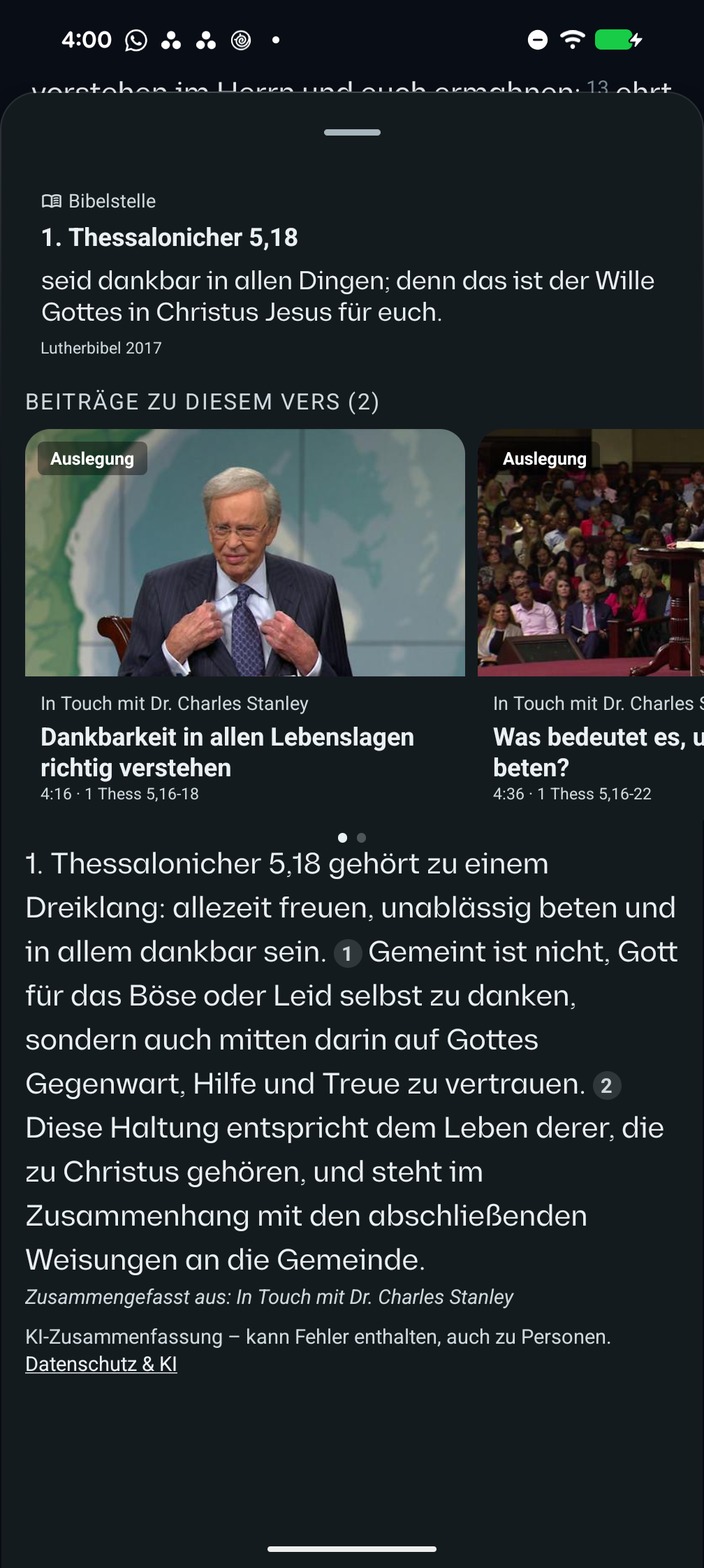
Use media cards with creator, original source, duration and relevant time range. Link supported claims to precise excerpts. Offer transcript and original context; playback starts deliberately and failure leaves the conversation readable.
Compare the alternatives
Let readers inspect the source behind an explanation.
A · Original clip
An explicit time range makes the evidence inspectable.
B · Evidence and explanation
Source words and synthesis have different roles.
C · Media unavailable
The failure state does not erase the source identity.
Original wireframe proposals · No live controls · Grey rows represent schematic text, not loading states · Labelled placeholders are not Scripture quotations
Download this wireframe as SVGFailure modes
Autoplay; incorrect time windows; edited clips that reverse meaning; source opinions presented as consensus; a missing video hidden behind a confident synthesis.
Bible and faith considerations
This applies to sermons, teaching videos, podcasts and courses. Association with a verse is not proof of a particular interpretation.
What to validate
Check whether every evidence claim is supported at the linked position. Test unavailable media, captions, returning from playback and the context before and after an excerpt.
Research-informed design proposal. These visual alternatives have not been tested with users in this atlas. Source findings, documented behaviour and this proposed adaptation are different kinds of evidence.
Sources and adaptation
This card is an original design synthesis. The following sources inform its content distinctions, interaction approach or review requirements; they do not validate the whole pattern.
- CitationsPattern detail reviewed · Citation presence alone does not establish claim support.
- The Shape of AICatalogue and named entries reviewed · The site states CC BY NC SA. This atlas uses original text and original wireframes; it does not reproduce the source illustrations.
- Designing Audio AI People Actually TrustArticle reviewed · The author scopes this to responsible audio AI, not a complete conversational-agent guideline.
Common scenarios and flows
- Read a long passage from a conversation — Inspect complete Scripture without letting an embed take over the dialogue.
- Prepare teaching with accountable evidence — Build an explanation that another person can inspect, without outsourcing interpretive responsibility.
Examples in use
Attributed app evidence with dates and review limits. A screenshot illustrates an implementation; it does not establish that the proposal works for every audience.
Design principles in this decision
Editorial application of Missional by Design. These values frame review questions; they do not validate a pattern’s effectiveness.
- Honesty — Could this interface lead a person to infer more authority, certainty, privacy or human support than the service provides?
Compare alternatives using the task and evidence above. Record competing needs instead of treating a principle as an automatic verdict.