Pattern 07
Compare without flattening
Show differences while keeping edition and reference identity intact.
Concrete takeaway
Name each edition and its passage range.
Choose an approach
These are editorial decision conditions to validate. Some alternatives are successive states or can be combined; they are not always exclusive choices.
| Alternative | Use when | Tradeoff or requirement |
|---|---|---|
| A · Two editions | A brief comparison is enough | Matching verse labels do not prove word alignment |
| B · Full comparison | Comparison becomes a sustained study task | A separate workspace requires a return route |
| C · Mapping differs | Numbering or mapping differs | An honest gap interrupts seamless comparison |
The problem
Side-by-side passages can imply that every word and verse aligns exactly across translations or canon conventions.
The pattern
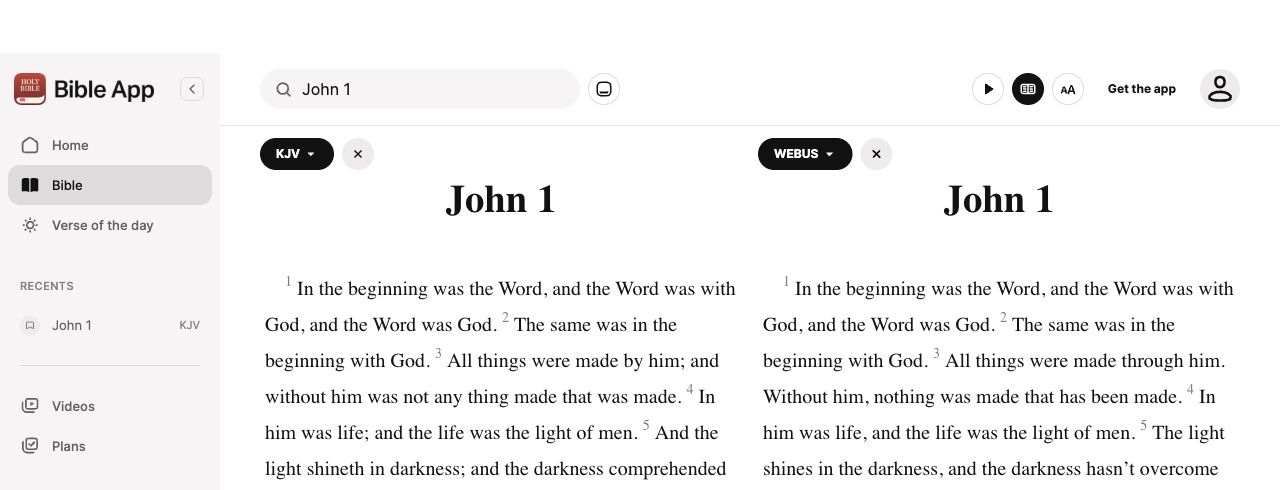
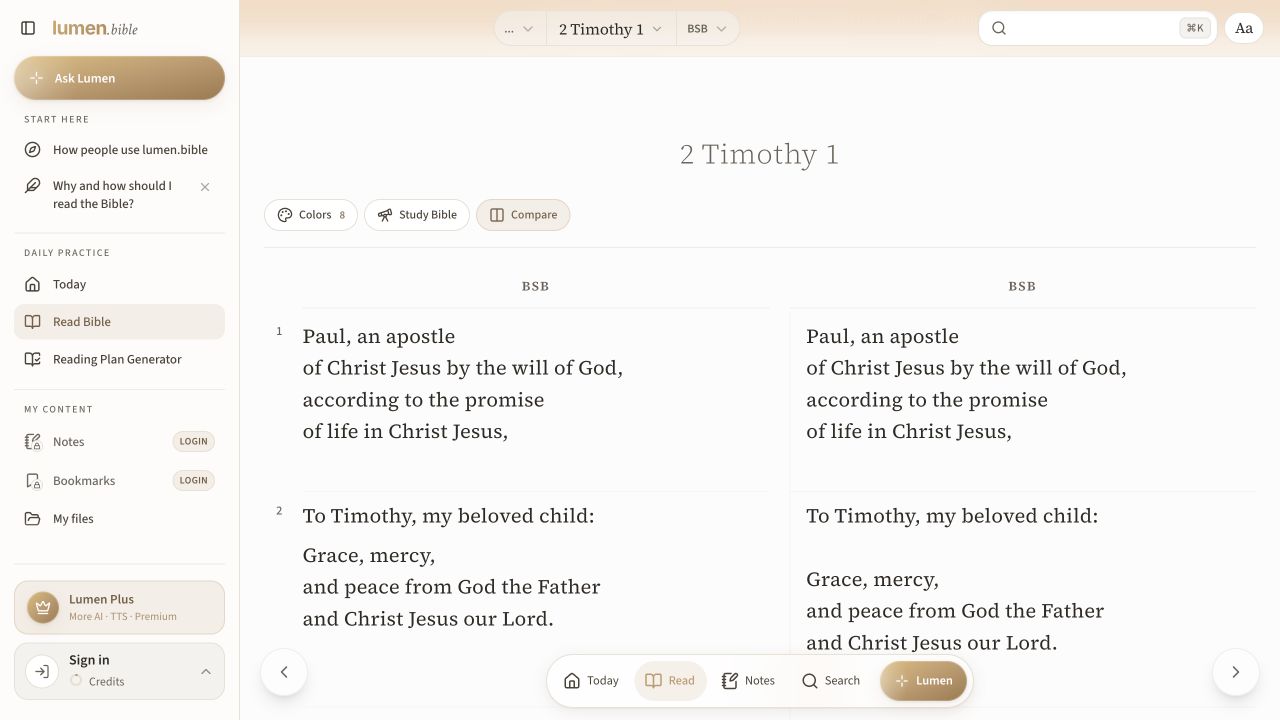
Name each edition and its passage range. Use reliable reference mappings; explain discrepancies and unknown mappings. Move large comparisons out of a narrow chat bubble into a responsive workspace. Layout, verse grouping and linked scrolling are separate decisions: compare the dedicated parallel-reading, verse-by-verse and linked-scroll patterns. Interlinear views need token alignment beyond a shared verse reference.
Compare the alternatives
Show differences while keeping edition and reference identity intact.
A · Two editions
Each passage retains its provenance.
B · Full comparison
A wider workspace supports sustained study.
C · Mapping differs
Uncertainty is visible before navigation.
Original wireframe proposals · No live controls · Grey rows represent schematic text, not loading states · Labelled placeholders are not Scripture quotations
Download this wireframe as SVGFailure modes
Invented word alignment; silently moving a note onto different wording; tiny multi-column text on mobile.
Bible and faith considerations
A reference anchor can travel across editions when mapping is reliable; an exact text selection usually requires edition-specific handling.
What to validate
Test verse bridges, different numbering and missing mappings. Can readers identify each edition and understand when a comparison is approximate?
Research-informed design proposal. These visual alternatives have not been tested with users in this atlas. Source findings, documented behaviour and this proposed adaptation are different kinds of evidence.
Sources and adaptation
This card is an original design synthesis. The following sources inform its content distinctions, interaction approach or review requirements; they do not validate the whole pattern.
- Scripture structure documentationRelevant structure and marker references reviewed · A format is not a complete model of app behaviour, annotations or formation.
- Record your insights using NotesOfficial documentation reviewed · Documentation does not validate all proposed sync or overlap behaviour.
- Where should AI sit in your UIArticle reviewed · Its role interpretations should be tested with the intended audience; they do not establish universal layout rules.
- Understanding ReflowGuidance reviewed · Some content has defined exceptions; test the actual experience.
Common scenarios and flows
- Compare editions across screen sizes — Inspect wording and context while retaining edition identity.
- Prepare teaching with accountable evidence — Build an explanation that another person can inspect, without outsourcing interpretive responsibility.
Examples in use
Attributed app evidence with dates and review limits. A screenshot illustrates an implementation; it does not establish that the proposal works for every audience.
Design principles in this decision
Editorial application of Missional by Design. These values frame review questions; they do not validate a pattern’s effectiveness.
- Rootedness — Which source and tradition inform this experience, and what meaning or context might this adaptation lose?
Compare alternatives using the task and evidence above. Record competing needs instead of treating a principle as an automatic verdict.